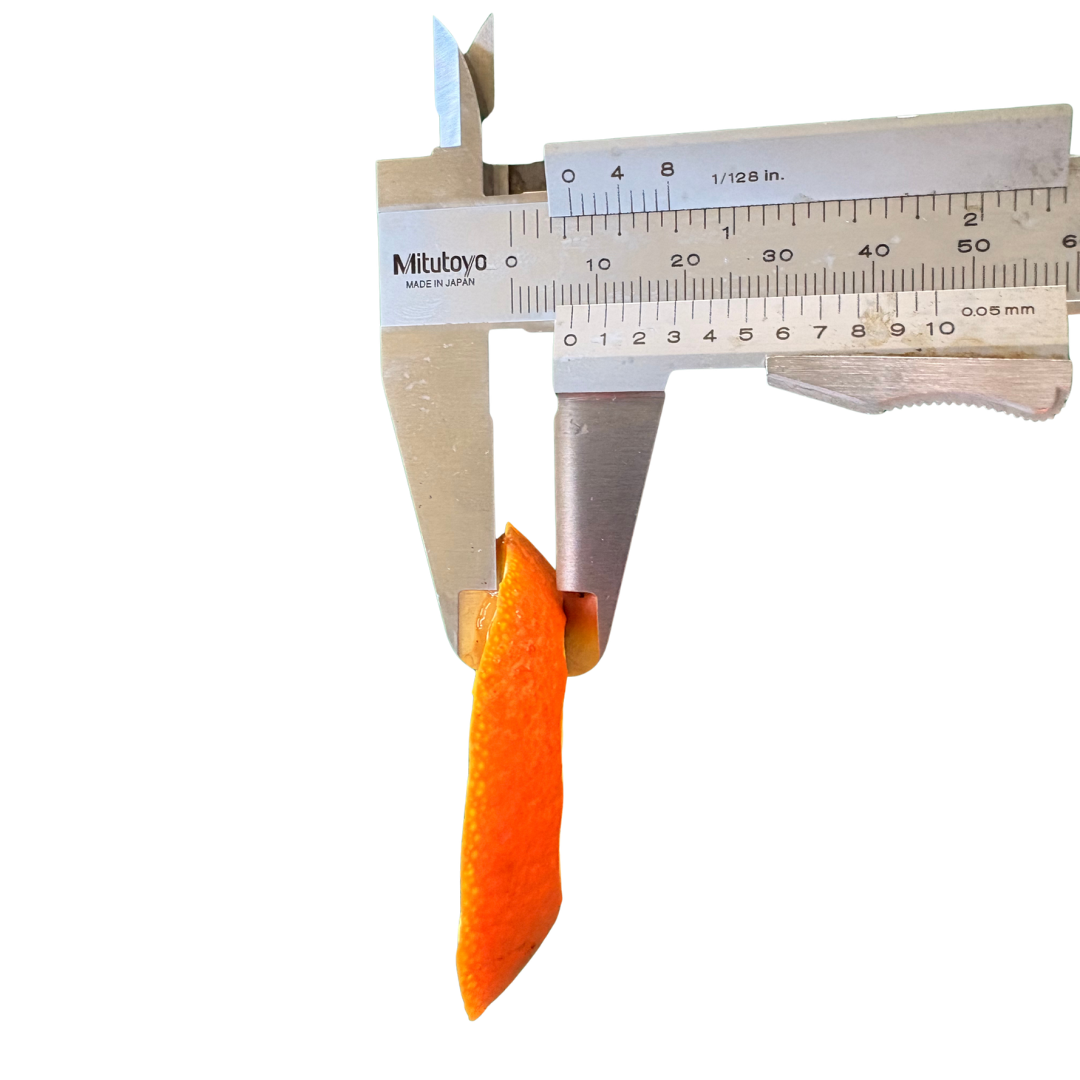
Cubed or sliced
Vegetables to be dehydrated can be presented in various forms: whole pieces, halves, quarters, slices, cubes or dices, strips, etc.
The thickness of the raw material is very important for the following reasons:
Drying speed and mass transfer
Dehydration involves applying heat to the product and subsequently evaporating the water. A key internal factor is the ability to transport water from the inside to the surface. The thicker the piece, the longer the distance the water must travel, which considerably slows down the process. It is recommended that the process be as fast as possible to avoid product degradation, especially in the initial stages.
Prevention of “crust” formation
If the piece is too thick and the temperature is high, solutes can migrate to the surface, forming a layer or impermeable crust. This crust traps moisture in the center of the piece, preventing it from drying properly and potentially causing the product to rot inside even if it appears dry on the outside.
Product uniformity
To ensure homogeneous drying, it is vital that all pieces have a uniform thickness. If thin and thick pieces are mixed, the thin ones will over-dry (losing nutrients and color), while the thick ones will remain moist.
To standardize size, it is recommended to use a mandoline or a mechanical processor.
Thickness table for vegetables
| Product | Thickness (mm) |
| Apple | 6-10 |
| Citrus fruits | 5-10 |
| Mango |
Slices: 2-5 Cubes: 10 x 10 Strips: 50x 5 |
| Aubergine | 10-20 |
| Tomato | 10 x 10 |