
Dehydration: a look at the past
OBJETIVE
The objective of this operation is to remove the water contained in the product until a residual moisture level (aw = 0.6) is reached.
Why is weight important? The process is stopped when a safe Water Activity (aw) value is achieved. Since we don’t always have a water activity meter and to speed up the process—avoiding constant measurements—we use the Yield Factor to estimate how much water has been removed based on weight.
Apoyo visual
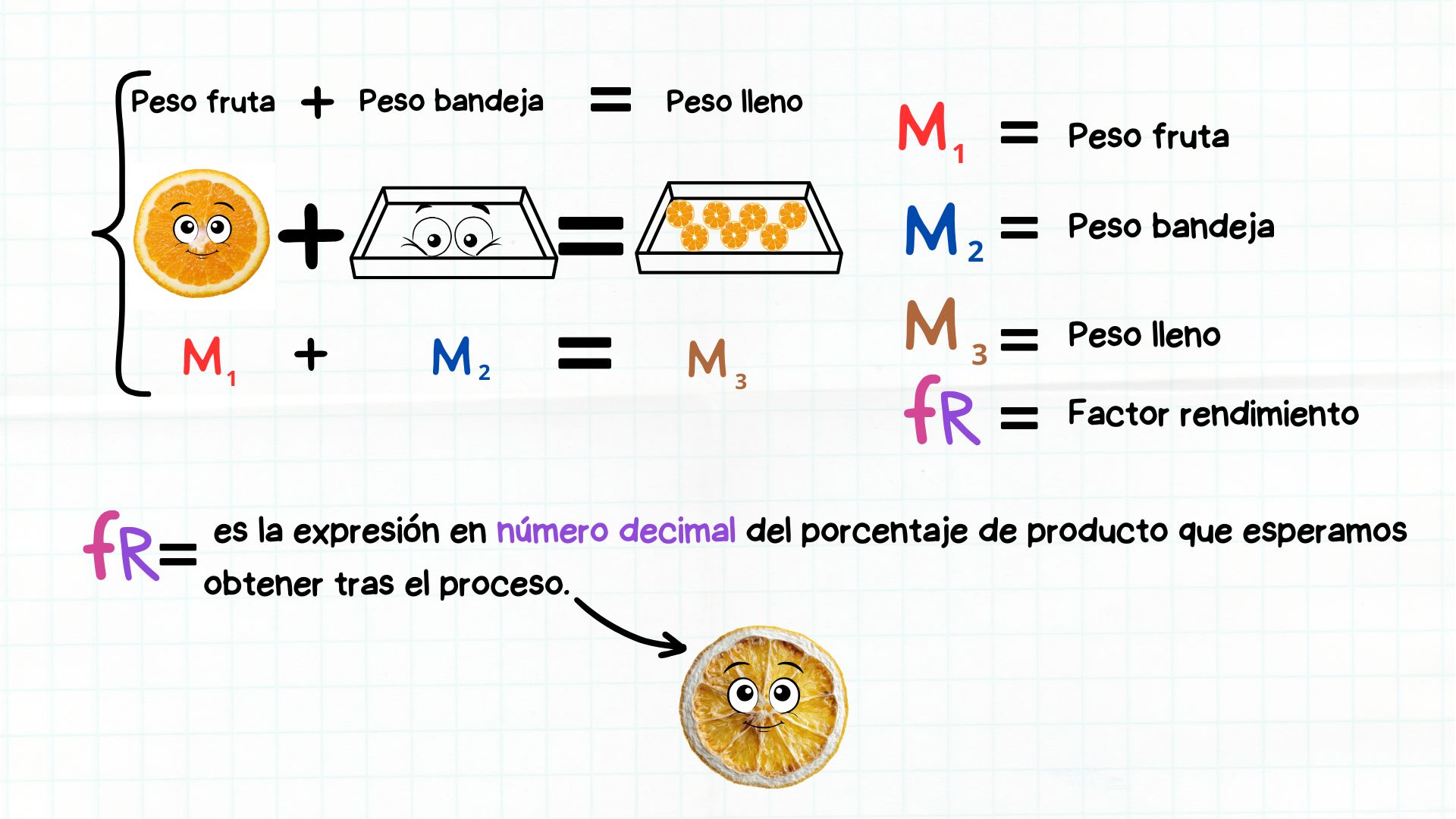
YIELD FACTOR
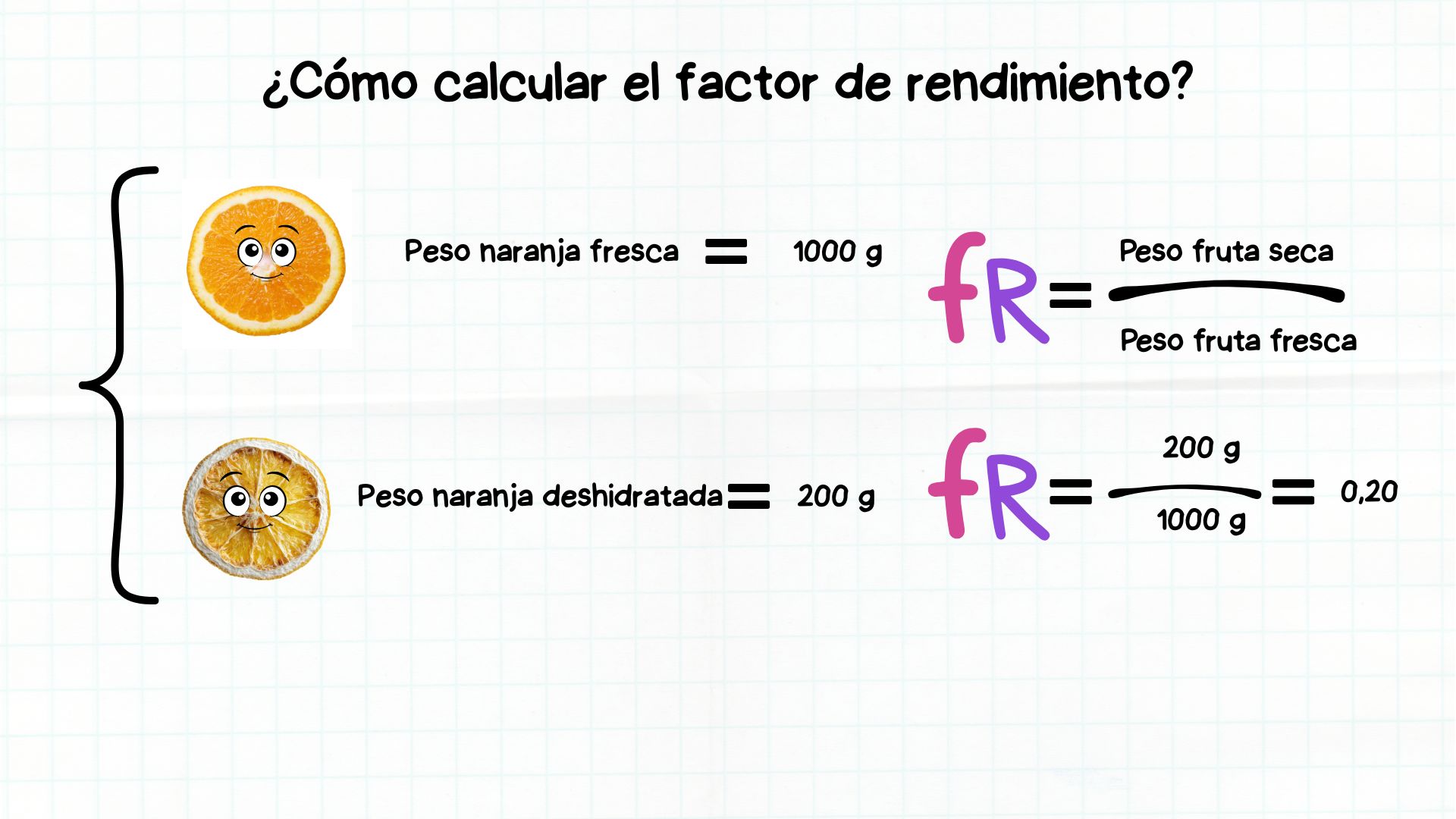
Yield Factor refers to the amount of product remaining after removing the water necessary to ensure food stability. This factor is calculated based on the desired final Water Activity (aw).
If we aim for a 20% yield (which corresponds to a safe water activity level for fruit preservation), the factor is calculated as follows:
YF = 20/100= 0.20
Reference values according to product type:
Fruits: Yield typically ranges between 12% and 20% (Factor: 0.12 to 0.20).
Vegetables: Yield is usually lower, between 8% and 15% (Factor: 0.08 to 0.15).
Apoyo visual
OPERATING PROCEDURE
To speed up work in the pilot plant and avoid constant water activity measurements, weight is used as the main indicator. The Yield Factor allows us to convert a laboratory measurement into a simple weighing calculation, ensuring a fast and straightforward process.
However, to optimize results and guarantee maximum food safety, it is advisable to verify the water content of the final product by measuring water activity once the process is complete.
Procedure:
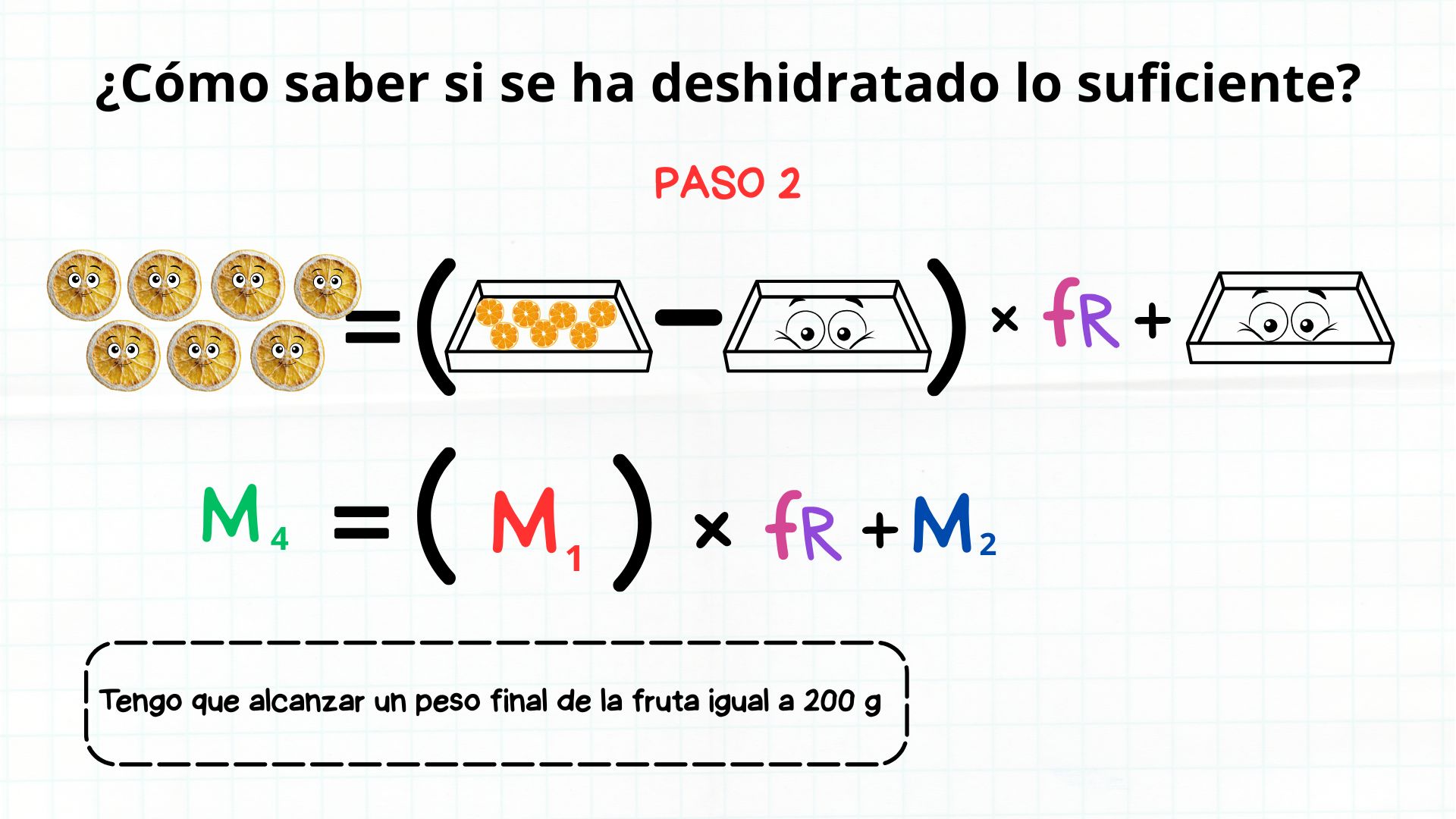
Initial weighing: Weigh the empty tray (M2).
Loading: Place the fruit on the tray without overlapping the pieces (M1).
Recording: Weigh the tray with the fresh fruit (M3).
Programming: Set the time and temperature.
Control: Periodically remove the tray and weigh it to see how much weight has been lost.
Apoyo visual
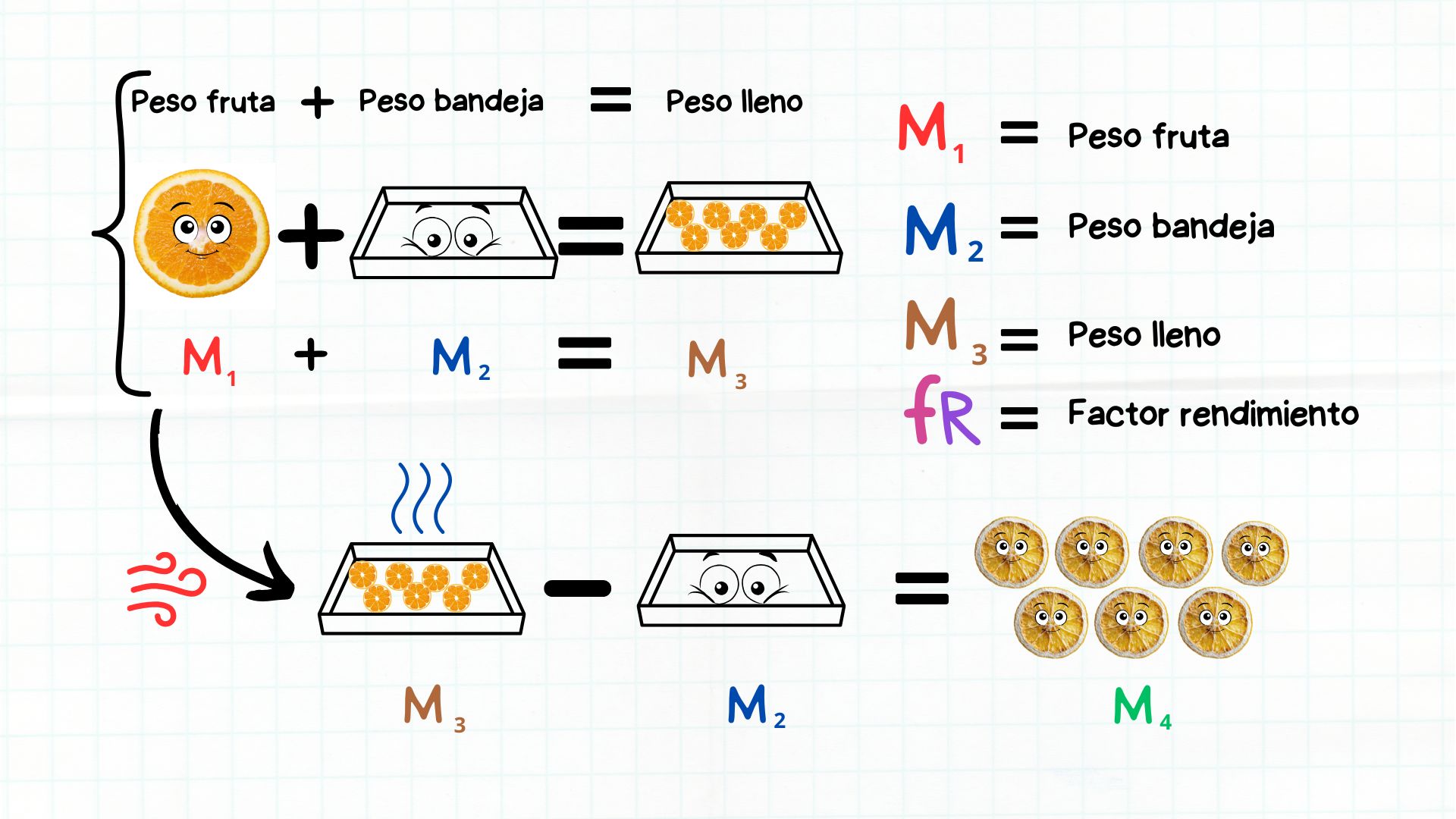
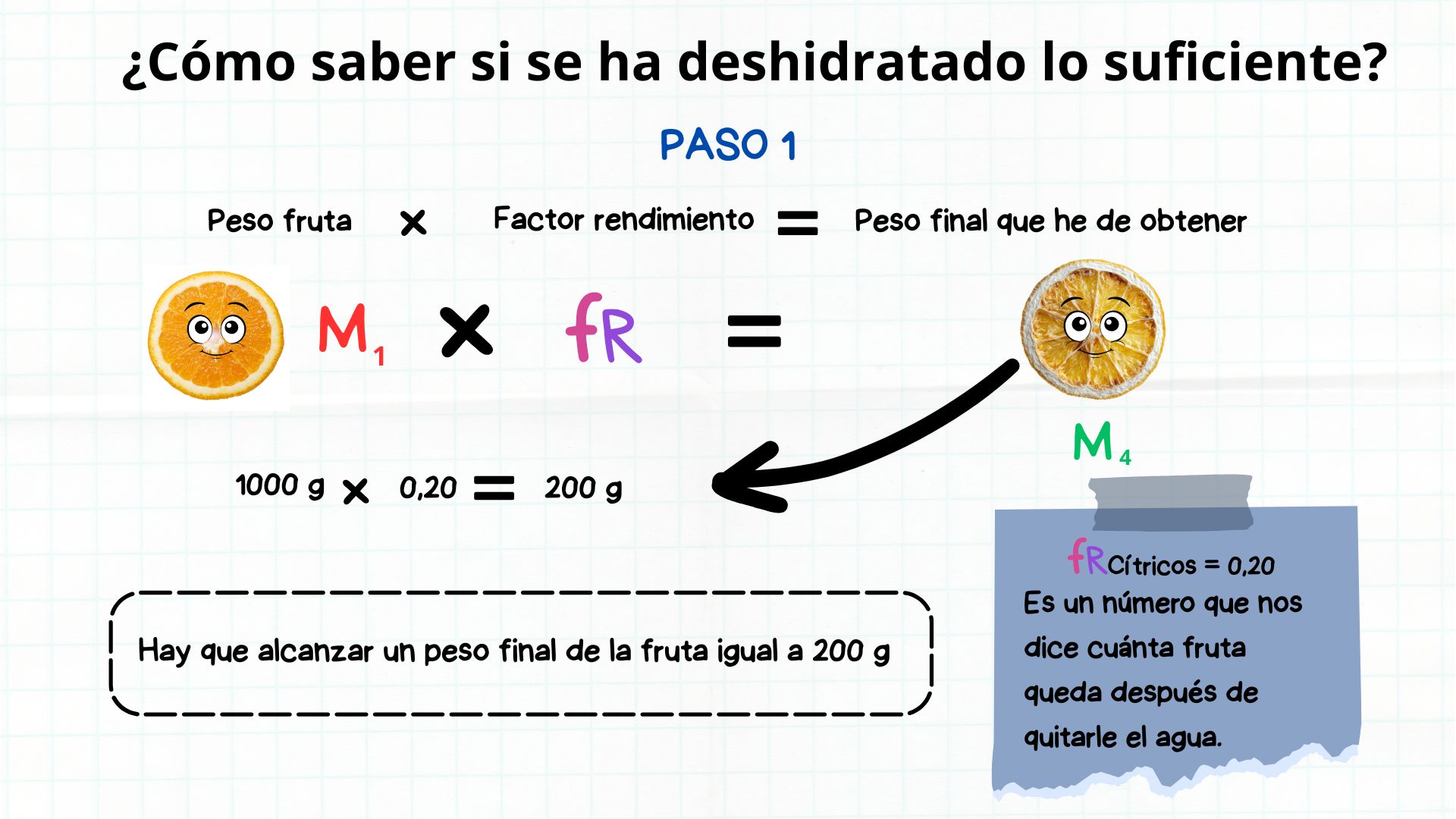
PROCESS COMPLETION
We will use the following formula to determine when the fruit has reached the correct moisture content and water activity:
Final weight of dehydrated fruit=Weight of fresh fruit×Yield Factor+Weight of the tray
Note: If you did not weigh the fruit alone before placing it on the tray, the weight of the fresh fruit is calculated by subtracting:
Weight of tray with fruit−Weight of empty tray
Finally, we add the tray weight back because each recorded weighing includes both the fruit and the tray.
Apoyo visual
CHECK THE WATER ACTIVITY
Once the target weight is reached, we take a sample and measure it with an aw meter to verify that the free water content is low.

The Freeze-Drying Process: From Freezing to Sublimation
Unlike conventional hot-air dehydration, freeze-drying is a preservation method based on the removal of water through sublimation (the transition of water from solid to gas without passing through the liquid phase). This process better preserves the structure, color, and nutritional properties of the raw material.
At an industrial level: Large-scale freeze-dryers are integrated systems that carry out the entire cycle within the same chamber: first, ultra-rapid freezing of the product, followed by the application of vacuum and controlled heat for sublimation.
In Lili’s pilot plant: The process is managed in stages. Due to the characteristics of the available equipment, the product must first be frozen in an external freezer or blast chiller before being placed in the freeze-dryer’s vacuum chamber.
Critical Steps in Lili’s Pilot Plant
Freezing: Once the raw material is prepared, it must be frozen to a temperature below its eutectic point (usually below -20°C). It is essential that the product is completely solid to prevent water from boiling when the vacuum is applied (a phenomenon called puffing).
Loading and Vacuum: The frozen product is quickly transferred to the freeze-dryer to avoid surface thawing. When the equipment starts, a deep vacuum is generated, allowing the ice to turn into vapor.
Desorption and Final Control: In the final phase, the most tightly bound water is removed. As in dehydration, the process ends when the product reaches its calculated final weight and an extremely low water activity (aw ~ 0.2–0.3).

Reflect and Analyse
Now that you have both products in front of you (hot-air dehydrated and freeze-dried), perform a visual and tactile analysis before going to the lab to measure aw. Carefully observe and answer the following questions in your Learning Diary:
1. Food Structure (Architecture)
Which product maintains the original volume of the fresh fruit?
Which one has shrunk or contracted?
What do you think explains the difference in internal structure?
2. Color Examination
Which one retains a color closer to the original fruit?
Do you notice any signs of browning in the hot-air dehydrated product?
3. Texture Test
When breaking a piece with your fingers, which product is drier and more brittle?
Which one feels leathery or elastic?
4. Porosity
Using a magnifying glass, in which product can you see small pores or cavities left by ice crystals during sublimation?
This exercise helps you connect sensory observations with the underlying science of dehydration and freeze-drying, including the effects on structure, color, texture, and porosity.